
A biomimetic
cabinet ofcuriosities.
Seven encounters between living systems and human invention.

Evolution is an unrelenting problem-solver. Across the living world, plant and animal species branch and develop, burrowing into the earth, rising into the skies and swimming through the depths. As they diverge and reconverge, patterns emerge.
Wings can be made of skin, bone and feather, or cuticle, cut and polished by the same constraints of the natural world ﹘ air resistance, gravity. Countless crustaceans insist on developing to look just like crabs ﹘ a process known as carcinization.1 Sharks, penguins and dolphins ﹘ fish, bird and mammal ﹘ morphed into remarkably similar forms, each shaped by the demands of moving efficiently through water.
Evolution sculpts, adds and takes away in its tortuous pursuit of the most adaptable solutions. Given enough time, it explores an extraordinary range.
So when we face problems of navigation, coordination, sensing or movement, we need not begin from scratch. We can look to our earthly co-inhabitants and learn from their ingenuity.
Inside this cabinet are seven specimens: seven instances in which we looked beyond ourselves for inspiration, and found that another species had already had a breakthrough. These specimens also challenge an assumption: that sophisticated solutions require intelligence or structures that resemble our own.
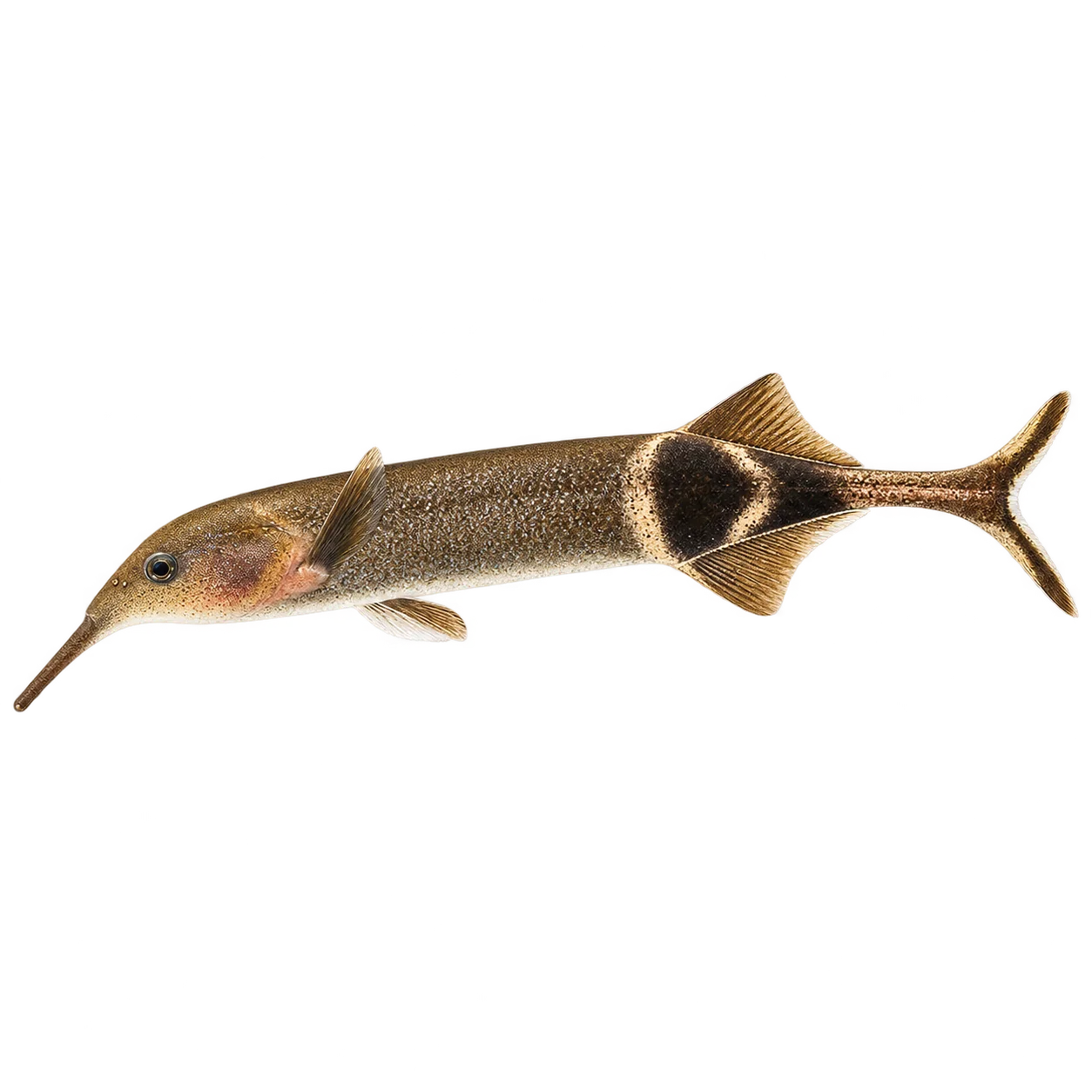
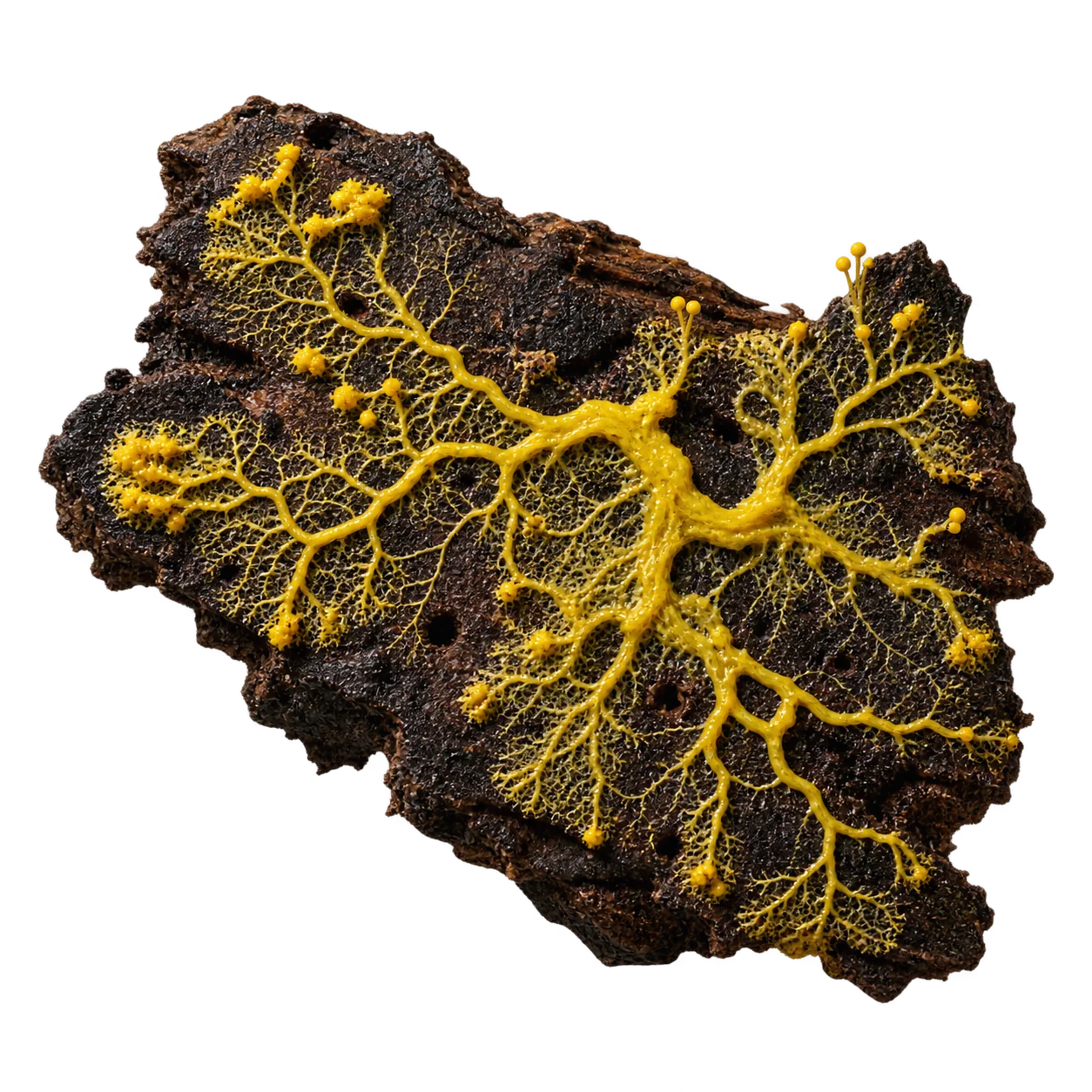
A firefly coordinates without a leader. A slime mould builds a network without a brain. A fish senses what it cannot see. Each solves a problem through capabilities very different from our own. Their ingenuity matters beyond what we can borrow from it.
As we build machines that unsettle our ideas about intelligence and our uniqueness, these specimens offer a useful reminder: our way has never been the only one to meet the world. This cabinet is an invitation to de-center ourselves for a moment; to practice the humility to see the sophistication of behaviour and problem-solving in other beings, regardless of how many neurons they have, and keep an open mind as we redefine humanness.
References
- How to become a crab: Phenotypic constraints on a recurring body plan — Wolfe, J. M., Luque, J. & Bracken-Grissom, H. D. (2021)
- Firefly synchrony: A behavioral strategy to minimize visual clutter — Moiseff, A. & Copeland, J. (2010)
- Synchronization of pulse-coupled biological oscillators — Mirollo, R. E. & Strogatz, S. H. (1990)
- Firefly-inspired sensor network synchronicity with realistic radio effects — Werner-Allen, G., Tewari, G., Patel, A., Welsh, M. & Nagpal, R. (2005)
- Circadian regulation of sunflower heliotropism, floral orientation, and pollinator visits — Atamian, H. S., et al. (2016)
- Artificial phototropism for omnidirectional tracking and harvesting of light — Qian, X., et al. (2019)
- Mosquitoes use vision to associate odor plumes with thermal targets — van Breugel, F., Riffell, J., Fairhall, A. & Dickinson, M. H. (2015)
- A robust layered control system for a mobile robot — Brooks, R. A. (1986)
- Intelligence without representation — Brooks, R. A. (1991)
- iRobot introduces Roomba Intelligent FloorVac — iRobot (18 September 2002)
- Rules for biologically inspired adaptive network design — Tero, A., et al. (2010)
- A Physarum-inspired approach to supply chain network design — Zhang, X., Adamatzky, A., Yang, X.-S., Yang, H., Mahadevan, S. & Deng, Y. (2016)
- Dung beetles use the Milky Way for orientation — Dacke, M., Baird, E., Byrne, M., Scholtz, C. H. & Warrant, E. J. (2013)
- Computer vision techniques demonstrate robust orientation measurement of the Milky Way despite image motion — Tao, Y., Perera, A., Teague, S., McIntyre, T., Warrant, E. & Chahl, J. (2024)
- Distance, shape and more: Recognition of object features during active electrolocation in a weakly electric fish — von der Emde, G. & Fetz, S. (2007)
- Biomimetic sensors: Active electrolocation of weakly electric fish as a model for active sensing in technical systems — von der Emde, G. (2007)
- Two identified looming detectors in the locust: Ubiquitous lateral connections among their inputs contribute to selective responses to looming objects — Rind, F. C., et al. (2016)
- Collision avoidance using a model of the locust LGMD neuron — Blanchard, M., Rind, F. C. & Verschure, P. F. M. J. (2000)
- Research history and staff profile — Rind, F. C. (undated)